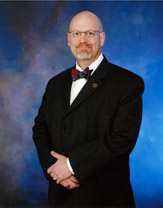
About the Speaker:
Peter Williams is the Warden of Tyndale House, Cambridge (http://www.tyndale.cam.ac.uk/)
and a Honorary Senior Lecturer in Biblical Studies at the University of
Aberdeen and a lecturer at University of Cambridge. Williams earned his
M.A., M.Phil., and Ph.D. at Cambridge University studying ancient
languages related to the Bible. Williams originally planned to become a
Bible translator, but after seeing how many students of the Bible did
not recognize its authority, Williams decided to change his professional
direction and become an evangelical scholar in order to advance
confessional scholarship. Dr. Williams is now recognized as one of the
foremost Old and New Testament language scholars in the world. He has
spoken in locations across the U.S. and the world on Biblical subjects
including Bible translation and apologetics.
This
seminar was recorded by the NW Creation Network during the Digging for
the Truth Series at The Bear Creek School, Redmond WA
What happens when we die? Can miracles be explained?
Is there really a God? Answers to questions such as these are as varied
as they are confusing, and spring from a variety of mystical belief
systems. But the fact is, we can know the truth. There are solid,
logical answers to satisfy the heart and mind of those who are seeking.
If you or someone you know has genuine questions about issues at the
core of human existence, this apologetic series is an excellent
resource.
Have you ever heard that all roads lead to
heaven? Have you had someone tell you that as long as you’re sincere
about what you believe, it doesn’t really matter what you believe? If
you hold to one of those ideas, or you would like some good answers
about how to respond, Chip addresses those very questions.
Chip wraps up this series with a question -
perhaps the most important question you may have ever been asked.
That's intriguing! What could be the very most important question
you've ever been asked? Join Chip to find out.
What happens when we die? Can miracles be explained?
Is there really a God? Answers to questions such as these are as varied
as they are confusing, and spring from a variety of mystical belief
systems. But the fact is, we can know the truth. There are solid,
logical answers to satisfy the heart and mind of those who are seeking.
If you or someone you know has genuine questions about issues at the
core of human existence, this apologetic series is an excellent
resource.
We've been talking about why you can
confidently believe in the claims of Christ and Christianity. Most
likely, you know why you believe. But there is a group of people -
people you know, people you love, people you work with - who not only
don’t know, but they will likely never know, unless something changes.
Chip shares what has the potential to be a game changer when it comes to
taking the truth to those you love and care about.
What happens when we die? Can miracles be explained?
Is there really a God? Answers to questions such as these are as varied
as they are confusing, and spring from a variety of mystical belief
systems. But the fact is, we can know the truth. There are solid,
logical answers to satisfy the heart and mind of those who are seeking.
If you or someone you know has genuine questions about issues at the
core of human existence, this apologetic series is an excellent
resource.
What would you say if I told you that some of
the most severe critics of evolution are not Christians, not
creationists, but leading scientific scholars - non-believing scholars -
who say the scientific evidence simply does not support evolution? Join
Chip as he dives deeper into the topic of creation vs. evolution.
Chip wraps up his 4-part study on creation vs.
evolution, and he saved the best for last. Chip hits the theory of
evolution head-on with some incredible evidence from the scientific
community.
What happens when we die? Can miracles be explained?
Is there really a God? Answers to questions such as these are as varied
as they are confusing, and spring from a variety of mystical belief
systems. But the fact is, we can know the truth. There are solid,
logical answers to satisfy the heart and mind of those who are seeking.
If you or someone you know has genuine questions about issues at the
core of human existence, this apologetic series is an excellent
resource.
The Big Bang. Evolution. Darwin. Creation.
Who’s right? Who’s wrong? The controversy of origin is all around us.
Chip begins a 4-part study exploring creation vs. evolution.
What happens when we die? Can miracles be explained?
Is there really a God? Answers to questions such as these are as varied
as they are confusing, and spring from a variety of mystical belief
systems. But the fact is, we can know the truth. There are solid,
logical answers to satisfy the heart and mind of those who are seeking.
If you or someone you know has genuine questions about issues at the
core of human existence, this apologetic series is an excellent
resource.
Have you ever secretly wondered if the Bible is
true? I mean “down deep” wondered. Could this book really be the very
Word of God? Chip gives you seven reasons - intellectually, feasible
reasons - why that belief is on solid ground.
What happens when we die? Can miracles be explained?
Is there really a God? Answers to questions such as these are as varied
as they are confusing, and spring from a variety of mystical belief
systems. But the fact is, we can know the truth. There are solid,
logical answers to satisfy the heart and mind of those who are seeking.
If you or someone you know has genuine questions about issues at the
core of human existence, this apologetic series is an excellent
resource.
What happens to you when you die? Do you move
on to another life? Are you just dead? How can you be sure? Chip
investigates life after death. This is a compelling, very encouraging
look at what comes next.
Have you ever heard someone say, “How could a
loving God send people to hell?” Do you know what the Bible really
teaches about hell and how a person gets there? Join Chip to find out.
What happens when we die? Can miracles be explained?
Is there really a God? Answers to questions such as these are as varied
as they are confusing, and spring from a variety of mystical belief
systems. But the fact is, we can know the truth. There are solid,
logical answers to satisfy the heart and mind of those who are seeking.
If you or someone you know has genuine questions about issues at the
core of human existence, this apologetic series is an excellent
resource.
Do you really have to throw your brains in the
trashcan to be a Christian? Do the claims of Christianity hold up under
intense, critical scrutiny? Join Chip, as he begins this series, to
find out how to defend your faith.
Is there compelling evidence that Jesus is who
He said He is; that He’s indeed alive today? Chip makes a case for the
resurrection of Jesus Christ that will give you compelling answers for
this much-debated tenet of the Christian faith.
http://www.focuspress.org Why would a loving God allow evil, pain, and suffering? What is God's nature? Join Dr. Brad Harrub in examining one of the greatest questions asked about God concerning the evil, pain, and suffering seen today. Atheism's strongest argument answered!
Sam Gipp has recorded a very nicely done video that is simply filled with errors--errors historical, errors logical, errors factual, errors biblical. Let's begin the process of setting the record straight.
Part 2
Continuation of our response to, and rebuttal of, Sam Gipp's KJV Only presentation.
Part 3
Continued review of, and refutation of, Sam Gipp's KJV Only video.
White has also been an elder of Phoenix Reformed Baptist Church in Phoenix, AZ, since 1998.[6]
He is married to Kelli and they have two children; a son called
Joshua and a daughter called Summer. He also has one granddaughter
called Clementine born in December 2012.[7]
Originally presented in 2003 at Cal Poly, San Luis Obispo
Christian Dr. Gary Habermas vs then atheist Professor Antony Flew
GARY R. HABERMAS, Ph.D. LIBERTY BAPTIST THEOLOGICAL
SEMINARY & GRADUATE SCHOOL
DEPT. OF PHILOSOPHY & THEOLOGY
LIBERTY UNIVERSITY
LYNCHBURG, VA 24506 (434) 582-2577 or 582-2099 (OFFICE)
(434) 534-0601 (HOME)
Majors: Christian Education, Bible, Social Sciences
Minors: Philosophy, Greek, English and Speech
EXPERIENCE:
1981 to present: Liberty University
Title and
Position: Distinguished Research Professor; Liberty
Baptist Theological Seminary and Graduate School; Chair,
Department of Philosophy and Theology, Liberty
University; current appointment: teaching in PhD
program
1979 to 1981: William Tyndale College
Position and Title: Chairman of Philosophy
Department, Associate Professor of Apologetics and Philosophy of
Religion
PUBLICATIONS:
Thirty-Six Books (Author, Co-Author, or Editor), including:
What’s so Good about Feeling Bad?, with John Thomas (Tyndale, 2008)
C. S. Lewis as Philosopher, co-ed. with Jerry Walls & David Baggett (InterVarsity, 2008)
The Secret of the Talpiot Tomb: Unraveling the Mystery of the Jesus Family Tomb (Broadman & Holman, 2007)
Philosophy of History, Miracles, and the Resurrection of Jesus, second edition (Academx Publishing, 2006)
Resurrected? An Atheist & Theist Dialogue with A. Flew (Rowman & Littlefield, 2005)
The Case for the Resurrection of Jesus with M. Licona (Kregel, 2004)
The Risen Jesus & Future Hope (Rowman & Littlefield, 2003)
The Resurrection: Heart of New Testament Doctrine (College Press, 2000)
The Resurrection: Heart of the Christian Life (College Press, 2000)
The Thomas Factor: Using Your Doubts to Draw Closer to God (Broadman & Holman, 1999)
Beyond Death: Exploring the Evidence for Immortality with J.P. Moreland (Crossway, 1998; Wipf & Stock, 2003)
In Defense of Miracles: A Comprehensive Case for God's Action in History co-ed. with D. Geivett (Inter-Varsity, 1997)
Forever Loved: A Personal Account of Grief & Resurrection (College Press, 1997)
Prolegomena to Theology (Harcourt Brace, 1996)
Survey of Christian Theology (Harcourt Brace, 1996)
The Historical Jesus: Ancient Evidence for the Life of Christ (College Press, 1996)
Why Believe? God Exists! with T. Miethe (College Press, 1993)
Dealing with Doubt (Moody Press, 1990)
The Shroud & the Controversy: Science, Skepticism, and the Search for Authenticity with K. Stevenson (Thomas Nelson, 1990)
Did Jesus Rise from the Dead? The Resurrection Debate with A. Flew, ed. T. Miethe (Harper & Row, 1987; Wipf & Stock, 2003)
Verdict on the Shroud: Evidence for the Death and Resurrection of Jesus Christ with K. Stevenson (Servant Books, 1981; Dell Publishing, 1982); Nine foreign editions; International best-seller
The Resurrection of Jesus: An Apologetic (Baker, 1980; University Press of America, 1984)
Over Sixty Chapters or Articles in Additional Books,
including:
"The Resurrection of Jesus and the Talpiot Tomb," in
Buried Hope or Risen Savior? ed. Charles Quarles (Broadman & Holman, 2008)
"The Resurrection of Jesus and Recent Agnosticism," in
Reasons for Faith, ed. Norman Geisler & Chad Meister (Crossway, 2007)
"The Resurrection Appearances of Jesus" in Harmony of the Gospels, ed. Steven L. Cox & Kendall H. Easley (Broadman & Holman, 2007)
"Mapping the Recent Trend toward the Bodily
Resurrection Appearances of Jesus in Light of Other Prominent Critical
Positions," in
The Resurrection of Jesus: John Dominic Crossan & N. T. Wright in Dialogue, ed. R. Stewart (Fortress, 2006)
"Resurrection of Jesus" & "Resurrection of Jesus, Implications of," in
New Dictionary of Christian Apologetics, ed. C. Campbell-Jack & G. McGrath (InterVarsity, 2006)
"The Case for Christ's Resurrection," in To Everyone an Answer, ed. F. Beckwith, W.L. Craig, & J.P. Moreland (InterVarsity, 2004)
"Plato, Platonism," "Rationalism," & "Resurrection of Christ," in
Evangelical Dictionary of Theology, ed. W. Elwell, Second Ed. (Baker, 2001)
"Why I Believe the Miracles of Jesus Actually Happened" & "Why I Believe the New Testament is Historically Reliable," in
Why I am a Christian, ed. N. Geisler & P. Hoffman (Baker, 2001)
"Historical Epistemology, Jesus' Resurrection, & the Shroud of Turin," in
Proceedings of the 1999 Shroud of Turin International Conference, ed. B. Walsh (Magisterium Press, 2000)
"The Evidence of Appearances," in The Case for Christ by L. Strobel (Harper Collins/Zondervan, 1998)
"Philosophy of History, Historical Relativism and History as Evidence," in
Evangelical Apologetics, ed. M. Bauman, D. W. Hall, & R. C. Newman (Christian Publications, 1996)
"Did Jesus Perform Miracles?" in Jesus Under Fire: Modern Scholarship Reinvents the Historical Jesus, ed. M. Wilkins & J.P. Moreland (Zondervan, 1995)
"A Public Debate" in Arguing Persuasively by R. Lee & K. Lee (Longmans, 1989)
"A Plea for the Practical Application of Christian Philosophy" in
A Christian's Guide to Faith and Reason by T. Miethe (Bethany, 1987)
"Averroes, Rationalism and the Leap of Faith" in Shalom: Essays In Honor of Dr. Charles H. Shaw, ed. E.J. Mayhew (Tyndale College Press, 1983)
"Skepticism: David Hume" in Biblical Errancy: An Analysis of Its Philosophical Roots, ed. N. Geisler (Zondervan, 1981)
Articles:
Well over 100 articles and reviews published (or accepted) in journals and magazines such as:
Religious Studies,
Faith and Philosophy,
Journal for the Study of the Historical Jesus,
Dialog: A Journal of Theology,
Fides et Historia,
Christian Scholar's Review,
Philosophia Christi,
Catholic Digest,
The Simon Greenleaf Review of Law and Religion,
Bibliotheca Sacra,
Journal of the Evangelical Theological Society,
Themelios,
Trinity Journal,
International Christian Digest,
Apologia (India),
Criswell Theological Review,
Journal of Church and State,
Christian Counseling Today,
Christian Leadership Journal,
Grace Theological Journal,
Christianity Today,
Saturday Evening Post, and
Conservative Digest.
VISITING or ADJUNCT PROFESSORSHIPS:
1996 to present: Visiting or Adjunct Professor ,
teaching about forty courses at fifteen different
Graduate Schools and Seminaries, including:
Approximately 1800 lectures at about 100 universities, colleges, seminaries, in the U.S. and elsewhere, including:
Stanford, Pennsylvania, Duke Divinity, Rice, UCLA,
Notre Dame, Southern Methodist, Virginia, Virginia Tech,
Baylor, Michigan State, Washington (WA), Washington (St.
Louis), Louisiana State, Pennsylvania State, North
Carolina State, North Carolina, Kentucky, Eastern
Virginia Medical, Clemson, Arizona, Arizona State, Cal
Poly, George Mason, Windsor (Canada), Wycliffe Hall
(Oxford), Oriel (Oxford), Clare (Cambridge), Tyndale
House (UK), London School of Economics (UK), Uppsala
(Sweden), Lund (Sweden), Strasbourg (France), Moscow
(Russia), Novasibirsk (Siberia, Russia), Trinity
Evangelical Divinity, Trinity Western, Wheaton, George
Fox, Southwestern Baptist, Dallas Theological, Biola,
Bethel, Taylor, Southeastern Baptist, New Orleans
Baptist, Midwestern Baptist, as well as dozens of
churches, including Willow Creek, Southeastern
Christian, Maclean’s Bible, Mariners, Christ Fellowship,
and Thomas Road Baptist
PERSONAL DATA:
Marital Status: Married (Eileen), seven children, ten
grandchildren
Hobbies: Reading, sports, chess
Head Coach, Liberty University Ice Hockey Team (Club), 1985-1994
Antony Flew
After
the WWII, Flew achieved a first class degree in Literae Humaniores at
St John's College, Oxford. Flew was a graduate student of Gilbert Ryle,
prominent in ordinary language philosophy. Both Flew and Ryle were among
many Oxford philosophers fiercely criticised in Ernest Gellner's book
Words and Things (1959). A 1954 debate with Michael Dummett over
backward causation was an early highlight in Flew's career.[10]
For a
year, Flew was a lecturer in philosophy at Christ Church, Oxford.
Afterwards, he was a lecturer for four years at the University of
Aberdeen, and a professor of philosophy at the University of Keele for
twenty years. Between 1973 and 1983 he was professor of philosophy at
the University of Reading. At this time, he developed one of his most
famous arguments, the No true Scotsman fallacy in his 1975 book,
Thinking About Thinking. Upon his retirement, Flew took up a half-time
post for a few years at York University, Toronto.
Did Emperor Constantine have anything to do with putting in four Gospels (Matthew, Mark, Luke and John) in the New Testament? Many skeptics think the church supressed "gospels" outside of the New Testament, so they won't be in the canon of scripture. But is this true? Mike Licona explores this "Da Vinci Code" like conspiracy.

 About the Speaker: